Tarot archetypes quiz: Jung and the Major Arcana
A quiz on the psychological view of tarot: Jung and archetypes, the Shadow and the Self, the Wise Old Man and the Great Mother. Five of twelve questions.
- 5 questions
- ≈ 2 min
- +5 bronze keys for a flawless run
What are archetypes in tarot?
An archetype is a pattern people recognise across eras and cultures: the Mother, the Sage, the Hero, the Trickster. The Swiss psychiatrist Carl Gustav Jung brought the idea into psychology. This quiz checks whether you can spot those figures in the Major Arcana and how twentieth-century psychology came to look at tarot.
Jung believed that beneath personal experience lies a collective unconscious, a layer of images shared by everyone, which shows up in myths, fairy tales and dreams. He knew of tarot and remarked that its pictures resemble archetypal images of transformation. He never built a system for reading the cards, yet his ideas gave tarot a whole new vocabulary.
Which archetypes appear in the Major Arcana?
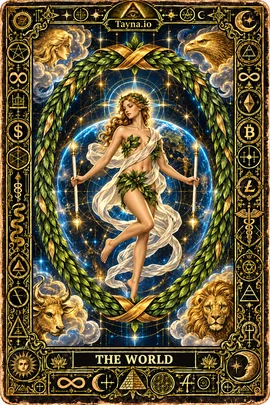
The Fool is the eternal wanderer and innocent, stepping where a careful person would not. The Empress and the Emperor carry the Mother and the Father: nurture and order. The Hermit is the Wise Old Man with his lantern. The Devil brings up the Shadow, the parts of ourselves we would rather not admit to. The World is read as wholeness, close to what Jung called the Self.
The Fool's walk through the trumps reads easily as a coming-of-age story: parents and teachers, trials, crisis, renewal and integration at the end. That is not what the cards meant historically, since they were drawn for a game, but it is a modern psychological frame and a handy way to remember the deck as one connected story.
How does the psychological view help in a reading?
Seen this way, a card works like a mirror. The picture stirs a reaction, and the reaction tells you more about yourself than any guidebook. Jung used the word synchronicity for meaningful coincidences between inner and outer events, and many readers explain tarot along those lines, with no magic required: a random card becomes a prompt to notice what was already there.
Two books published in 1980 set this approach in stone: Sallie Nichols's Jung and Tarot and the first part of Rachel Pollack's Seventy-Eight Degrees of Wisdom. Since then, for many readers, "What in me responds to this card?" has mattered more than "What will happen to me?" That is how Tayna treats the cards too: a spread is a reason to think, and the choice stays with you.
All questions and answers
Open after you play: the full question set with right answers and explanations.
1. Which trump is most often linked to the Wise Old Man archetype?
Right answer: The Hermit
The Hermit with his lantern is the classic Wise Old Man: knowledge earned in solitude and quiet.
2. Who brought the concept of the archetype into psychology?
Right answer: Carl Gustav Jung
Jung described archetypes as images of the collective unconscious. Freud and Adler built their theories differently.
3. Which card embodies the Great Mother archetype?
Right answer: The Empress
The Empress stands for nurture, fertility and growth. The High Priestess leans toward hidden knowledge instead.
4. Jung created his own system for reading tarot cards.
Right answer: Myth
Jung only mentioned tarot as a set of archetypal images. His followers built the psychological reading systems.
5. Which trump do psychologists tie most to the Shadow, the part of us we deny?
Right answer: The Devil
The Devil shows hidden urges and attachments. Seeing them clearly is the first step to loosening the chains.
6. What did Jung mean by synchronicity?
Right answer: A meaningful coincidence
Synchronicity is an outer event matching an inner one in a way that feels meaningful. Many readers explain tarot this way.
7. Which card is closest to Jung's Self, the image of wholeness?
Right answer: The World
The World closes the Major Arcana with everything gathered into one, which is why it is compared to Jung's Self.
8. The figure on a card you drew annoys you. What does the psychological view suggest?
Right answer: Ask what in me reacts to it
A strong reaction to an image often says something about you. That is the whole point of the card as a mirror.
9. Which 1980 book tied tarot to Jungian psychology?
Right answer: Jung and Tarot by Sallie Nichols
Sallie Nichols read the Major Arcana as a journey through archetypes. Her book came out in 1980.
10. Which trump is tied to the Father archetype of order and protection?
Right answer: The Emperor
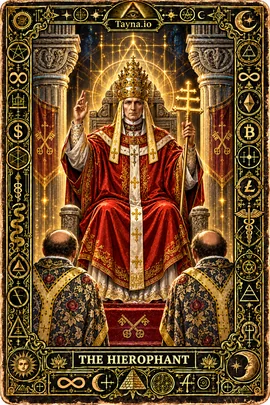
The Emperor is structure, rules and protection. The Hierophant is closer to a teacher and tradition.
11. In the psychological approach a card is a mirror, not a verdict.
Right answer: True
Psychologists see a reading as a prompt to reflect. The card reflects; it does not decide for you.
12. Which archetype is the Fool most often called?
Right answer: The eternal wandering innocent
The Fool is the eternal beginner, open to the world, stepping where a cautious person would not.