
Classic tarot decks of the 20th century quiz
A quiz on 20th-century decks: Rider-Waite-Smith, the BOTA deck, the Aquarian Tarot, Morgan-Greer and the round Motherpeace. Who made them and why they matter.
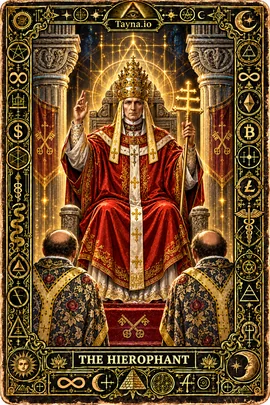
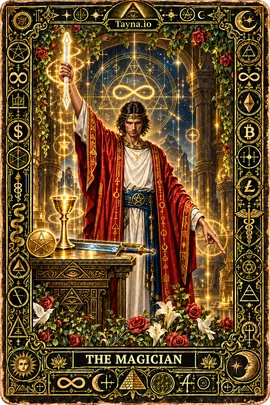
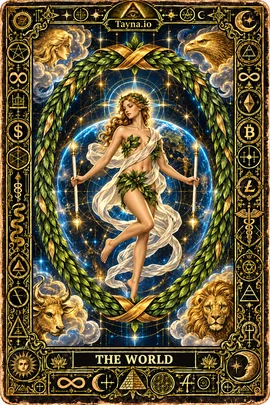
- 5 questions
- ≈ 2 min
- +5 bronze keys for a flawless run
Which 20th-century tarot decks are classics?
This quiz tests what you know about the decks that took tarot mainstream in the twentieth century. The most important one came out in London in 1909: designed by the mystic Arthur Edward Waite, illustrated by the artist Pamela Colman Smith and published by William Rider & Son. Hence the familiar name Rider-Waite, to which Smith's name is now more and more often added.
Smith was a notable figure in her day: she illustrated books, designed for the stage and exhibited in New York. She was paid a one-off fee for the deck, and its worldwide success came only after her death in 1951. In the 1970s the American company U.S. Games Systems reissued the deck, and that is when the real boom began.
What came after the 1909 deck?
Almost every deck of the century argues with Smith's deck or builds on it. Paul Foster Case issued a black-and-white deck for his BOTA school, which students colored in themselves. In 1970 David Palladini drew the Aquarian Tarot in an Art Deco style. The 1979 Morgan-Greer deck brought the figures close up and dropped the borders, and the feminist Motherpeace deck of 1981 came out on round cards.
A separate line ran alongside: the Thoth deck by Crowley and Harris, printed in 1969. Tayna has its own quiz on it; this one is about decks that grew out of Smith's storytelling approach. That approach is what made tarot readable without a book: you can see the meaning in the scene.
How the quiz works
Each run draws five questions from a pool of twelve: dates, names, unusual artistic choices and a couple of common misconceptions. Each answer is followed by a short explanation, and the run ends with a full review. A flawless run earns Tayna keys.
Tayna's own deck keeps the classic 78-card structure, and its meanings follow the tradition that grew up around the 1909 deck. That is why the history of these decks is useful to anyone learning to read: many familiar meanings were born in the pictures this quiz is about.
All questions and answers
Open after you play: the full question set with right answers and explanations.
1. In what year did the Rider-Waite-Smith deck come out?
Right answer: In 1909
William Rider & Son in London published the deck in 1909, with Waite's book following soon after.
2. Rider was the deck's co-author, a mystic and Waite's friend.
Right answer: Myth
Rider was the publisher, William Rider & Son. Waite designed the deck and Pamela Colman Smith drew it.
3. Who drew all 78 cards of the 1909 deck?
Right answer: Pamela Colman Smith
Waite designed it and Pamela Colman Smith drew it. Her friends called her Pixie.
4. What is unusual about the shape of the 1981 Motherpeace cards?
Right answer: They are round
Vicki Noble and Karen Vogel printed their deck on round cards, a rarity for tarot at the time.
5. Why was Paul Foster Case's BOTA deck issued in black and white?
Right answer: So students color it
Students colored the cards themselves from instructions, which helped them learn the symbols and colors.
6. You want to read cards without a guidebook. Which deck should come first?
Right answer: Scenes on every card
Scenes on every card, as in Smith's deck, let you catch the meaning straight from the picture.
7. Which Bram Stoker book did Pamela Colman Smith illustrate?
Right answer: The Lair of the White Worm
Smith illustrated The Lair of the White Worm in 1911, two years after the deck.
8. Pamela Colman Smith earned royalties on every deck sold.
Right answer: Myth
She was paid a one-off fee. The deck became a bestseller only after her death in 1951.
9. In what style did David Palladini draw the 1970 Aquarian Tarot?
Right answer: Art Deco
Palladini redrew the classic scenes in an Art Deco manner, with crisp profiles and flowing lines.
10. Which of these decks came out first?
Right answer: Rider-Waite-Smith
Rider-Waite-Smith in 1909, Thoth in 1969, the Aquarian Tarot in 1970, Motherpeace in 1981.
11. What made the 1909 deck a mass hit in the US in the 1970s?
Right answer: The U.S. Games reissue
U.S. Games Systems reissued the deck in 1971 and spread it across the country.
12. How does the 1979 Morgan-Greer deck differ from Smith's?
Right answer: Close-ups, no borders
The scenes are similar, but the figures are shown close up, with no white borders and in warm tones.