Tarot in Russia quiz: from Ouspensky to today
How did tarot reach Russia? A quiz on Ouspensky, Mebes, Shmakov, Papus's visit, the long Soviet silence and the comeback of the 1990s. Three of eight.
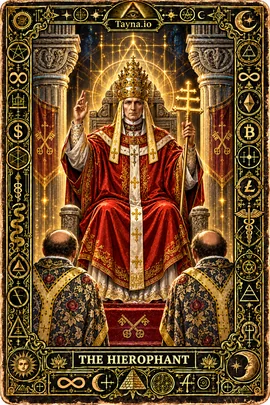
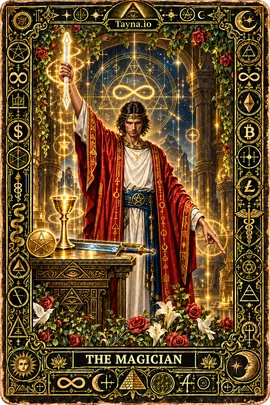
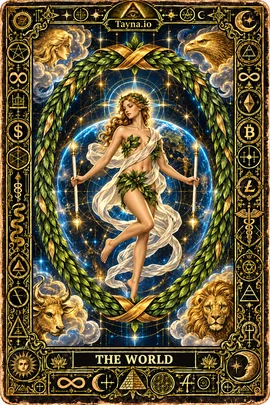
- 3 questions
- ≈ 1 min
- +3 bronze keys for a flawless run
How did tarot reach Russia?
This quiz is about how tarot arrived in Russia and who first wrote about it in Russian. In Italy and France tarot had been a card game for centuries, but it reached Russia already wearing its new costume as a "book of secrets", carried in by the occult fashion of the turn of the twentieth century. So Russians met it as a system of symbols, never as a game.
People in Russia had told fortunes with cards long before, mostly with ordinary playing cards and simple picture decks. A full tarot deck with its 22 trumps stayed a rarity for years, known mainly to readers of occult books.
Who wrote about tarot in early twentieth-century Russia?
The first notable book was Pyotr Ouspensky's The Symbolism of the Tarot, published in Russian in 1912. It is not a dictionary of meanings but a chain of short, poetic visions, one for each trump. Ouspensky later emigrated and settled in England, and the book came out in English too.
Around the same time Grigory Mebes was lecturing in St Petersburg; his course on the encyclopedia of occultism is built around the 22 arcana. In 1916 the engineer Vladimir Shmakov published a thick volume called The Sacred Book of Thoth: The Great Arcana of the Tarot. Both leaned on French writers, Eliphas Lévi and Papus, and Papus himself visited Russia.
What happened next?
After 1917 the occult societies closed, books on tarot all but vanished from print, and for decades the cards were known mostly by rumour. The comeback began in the late 1980s and the 1990s with translations, imported decks and the first Russian tarot schools.
Since then Russian tarot has grown its own vocabulary; the word "arcana" is used for any card far more often than in English. Hundreds of decks and books now appear in Russian, and Tayna carries the line on in its own way, with its own deck, online spreads and a gentle approach to the cards.
All questions and answers
Open after you play: the full question set with right answers and explanations.
1. Who wrote The Symbolism of the Tarot, published in 1912?
Right answer: Pyotr Ouspensky
Ouspensky's book was the first notable Russian work on tarot, and it was later published in English as well.
2. What kind of book was Ouspensky's Symbolism of the Tarot?
Right answer: Visions of the Major Arcana
Ouspensky wrote each trump as a short poetic vision rather than a list of meanings.
3. Nothing on tarot was written in Russian before 1917.
Right answer: Myth
Ouspensky, Mebes and Shmakov all wrote on tarot in the 1910s, long before the boom of the 1990s.
4. What was the title of Vladimir Shmakov's 1916 book?
Right answer: The Sacred Book of Thoth
Shmakov's The Sacred Book of Thoth: The Great Arcana of the Tarot came out in 1916, drawing on French authors.
5. Which French tarot author visited Russia in person?
Right answer: Papus
Papus travelled to Russia in the early 1900s. Etteilla died back in the 1700s and Lévi in 1875.
6. When did tarot become widely popular in Russia?
Right answer: In the late 1980s and 1990s
After the long Soviet pause, translations, decks and tarot schools appeared in the late 1980s and the 1990s.
7. Who lectured in St Petersburg on a course built around the 22 arcana?
Right answer: Grigory Mebes
Grigory Mebes built his course on the encyclopedia of occultism around the 22 arcana, following French authors.
8. You find a 1910s Russian tarot book in a second-hand shop. Who does it most likely follow?
Right answer: Eliphas Lévi and Papus
Mebes and Shmakov followed the French school of Lévi and Papus. Thoth and the Jungian view came decades later.