Tarot Knights: four cards of drive and motion
In tarot a Knight is the card of action: the suit's energy stops being studied, as with the Page, and gets put to work. Knights speak of movement, pursuit and pace; the suit shows the direction and the speed.
The four knights by suit
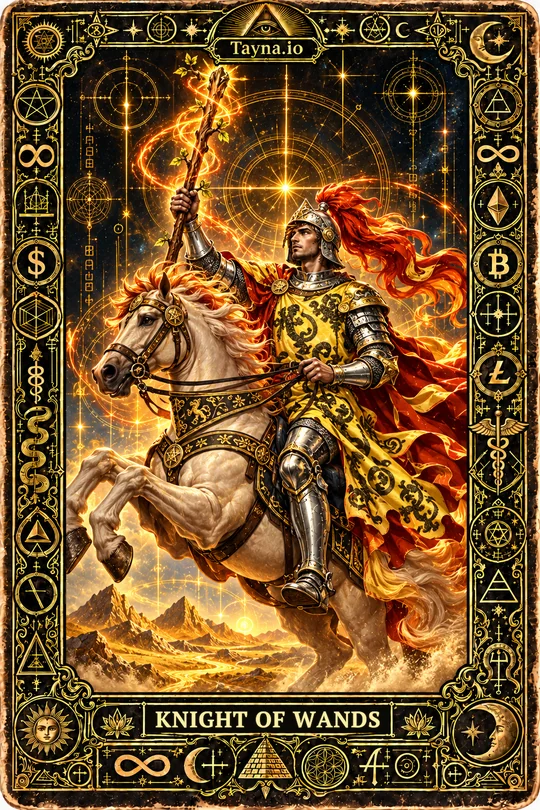
Knight of Wands
The Knight of Wands is the hottest-blooded of the four, charging after an idea, an adventure or a desire before any plan exists. Where the Knight of Pentacles is still counting steps, this rider is already over the hill; the only question is whether the fire lasts.
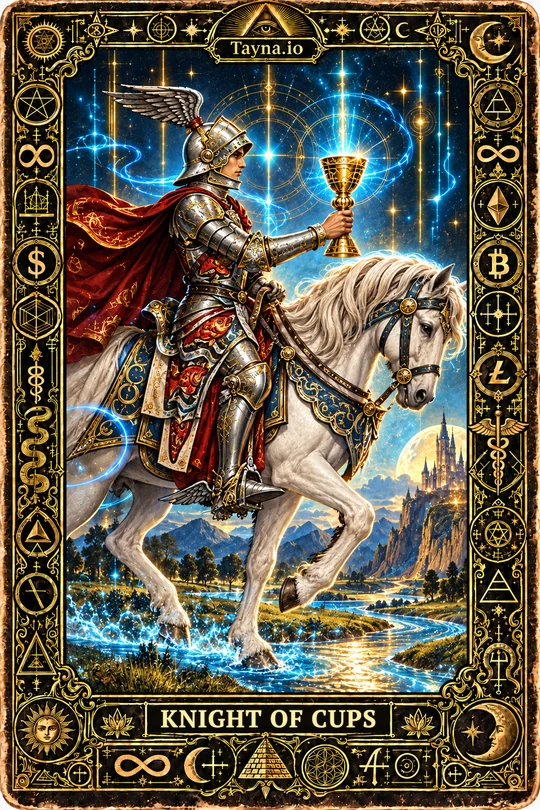
Knight of Cups
The Knight of Cups rides at a gentle walk and follows the heart: an offer, a confession, an invitation, a romantic gesture. Softer than the blunt Knight of Swords, this rider arrives beautifully, though sometimes more in love with the destination than with the road.
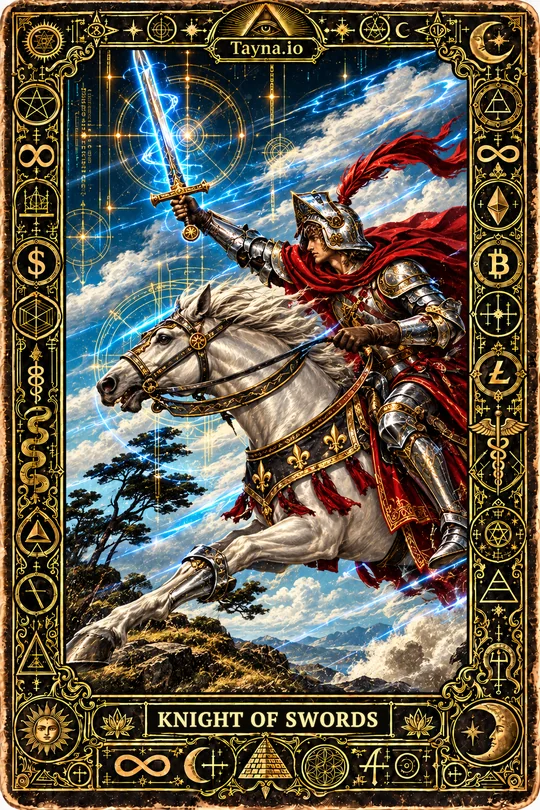
Knight of Swords
The Knight of Swords is thought on the attack: quick decisions, straight talk, a dash toward the truth at any cost. As fast as the Knight of Wands but driven by conviction rather than passion, the card warns that sharpness can cut deeper than you meant.
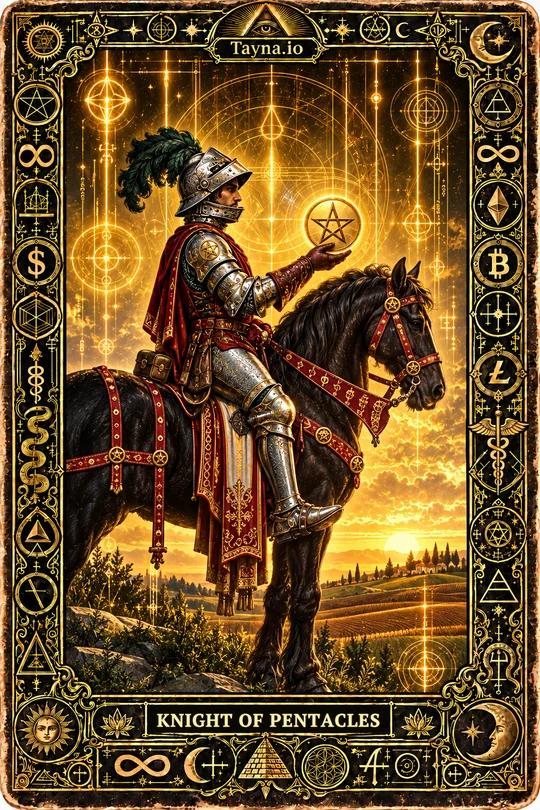
Knight of Pentacles
The Knight of Pentacles is the only rider who seems to stand still, moving through steady, methodical work where every step is checked twice. This one looks slow beside the other Knights, yet is the most likely to deliver a finished result, just later than hoped.


What the Knight rank means
On the court ladder the Knight sits between the Page and the Queen. The Page is still getting to know the suit, the Queen and King already command it, and the Knight lives at the most restless point in between: skilled enough to act, not yet seasoned enough to act evenly. That is the heart of the card — a quest, a push, a mission that gets someone out the door without looking back.
If you map court cards onto the numbered ones, the Knight sits closest to the eights: momentum, travel, events speeding up. That is why Knights so often answer questions about timing. When one appears, things are unlikely to stay frozen. Expect news, a trip, a move or a busy phase of a project, and the quicker the suit, the shorter the wait.
How the four Knights differ
Speed is the easiest way to tell them apart. Wands and Swords gallop, with events unfolding in days or even hours. Cups trot along, letting things arrive gently through mood and feeling. Pentacles barely move: results will come, but over weeks or months of patient effort. Keep that scale in mind whenever your question is really about when.
Next, look at what drives each rider. Wands chase desire and excitement, Cups follow the heart and a dream, Swords serve an idea or a principle, Pentacles answer to usefulness and duty. Compare that with your question. Asking about money and drawing the Knight of Cups suggests the decision is being made with feelings more than with numbers, which is worth noticing.
Several Knights in one reading
Two Knights together mean more than one storyline is picking up speed. A pair from the fast suits can make life feel suddenly crowded with trips, meetings and changes. The Knight of Wands beside the Knight of Pentacles shows a different tension: part of you wants to leap, part wants to prepare. The answer usually lies somewhere between the two.
Three Knights tend to describe a busy, noisy stretch in which many people and tasks pull at you at once — negotiations, visitors, a rush at work. It is neither a good nor a bad omen. It simply reminds you how easy it is to lose your heading in such a whirl, so pick one main direction.
All four Knights in a single reading are rare and read as a strong push: the old order is shifting on every front at once — feelings, thinking, work and money. This is a time to act rather than watch. If Queens or Kings appear nearby, they show where to find steady ground so that all this movement does not turn into chaos.
Knights in combination with other cards
With the Chariot any Knight doubles the theme of a journey and a win; the Knight of Wands and the Chariot describe a bold dash that genuinely can succeed. Next to the Hermit the motion slows and turns inward, so the Knight of Pentacles with the Hermit suggests finishing the work quietly on your own. The Tower beside the Knight of Swords points to abrupt events where quick adaptation helps.
The Knight of Cups with the Lovers is the classic pairing for a declaration or proposal, when feelings are finally spoken aloud. With the Star the same Knight adds hope and inspiration; with the Moon it cautions that pretty words have not yet been tested by actions. The Knight of Swords with Justice points to a dispute settled through facts and paperwork rather than emotion.
Among the Minor Arcana, watch the numbers around a Knight. A Knight next to the Eight of the same suit doubles the speed; a Knight next to a Four applies the brakes and asks for a pause. The Knight of Pentacles with the Ten of Pentacles speaks of long-term work for family or a lasting venture. A Page and Knight of one suit show an idea turning into action.
The Knight as a person, and reversed Knights
As a person, a Knight is usually a young adult, roughly twenty to thirty-five, or someone older who is living in search mode. Gender does not matter: a Knight can be a woman, a man or anyone else. Think of a messenger, a new acquaintance, a colleague with an idea, or someone who rides into your life fast.
Position and context tell you whether the card is a person or a situation. If it falls where the reading asks about a partner, a rival or the people around you, it is most likely someone you know. In a position about events or the future it describes pace and actions instead. Trust your first reaction: a name often comes to mind at once.
A reversed Knight is a broken rhythm. Wands lose their spark or flare up for nothing, Cups slide into sulking and empty promises, Swords turn into rudeness and snap judgements, Pentacles get stuck in inertia or perfectionism. As a person, this Knight is unreliable: lots of motion, little to show for it. The advice is to adjust your speed, not to stop completely.
Frequently asked questions
Does a Knight in tarot mean travel?
Often, yes. Knights are tied to movement, and a trip, a move or a work journey is one literal reading. It can also be a project or a relationship in motion, so check the nearby cards.
Which Knight is the fastest?
The Knight of Swords is usually seen as the swiftest, with the Knight of Wands close behind. The Knight of Cups moves gently, and the Knight of Pentacles is the slowest but the most dependable.
Is a tarot Knight always a man?
No. A Knight describes a kind of energy and a stage of life, not gender. It can be a young woman, a young man or a person of any age who is currently on the move.
What do two Knights side by side mean?
Two storylines are speeding up at once, or two active people are involved in the situation. If the suits contrast, such as Wands and Pentacles, the cards point to a choice between haste and patience.
When will events happen if a Knight is in the future position?
The Knights of Wands and Swords point to quick change, the Knight of Cups to developments over the coming weeks, and the Knight of Pentacles to a longer timeline. It is a guide, not a date.
Which card will you draw today?