Sevens in Tarot: Four Cards of Testing
In tarot, a seven is the test that follows the calm of a six: hold your ground, see through illusions, play it smart or wait for the harvest. It asks you to choose a strategy.
The four sevens by suit

Seven of Wands
The Seven of Wands is a test through challenge: you hold the higher ground while others push from below. It is the most active seven, calling for action rather than reflection. The card says the advantage is yours as long as you do not hand it over out of fatigue.
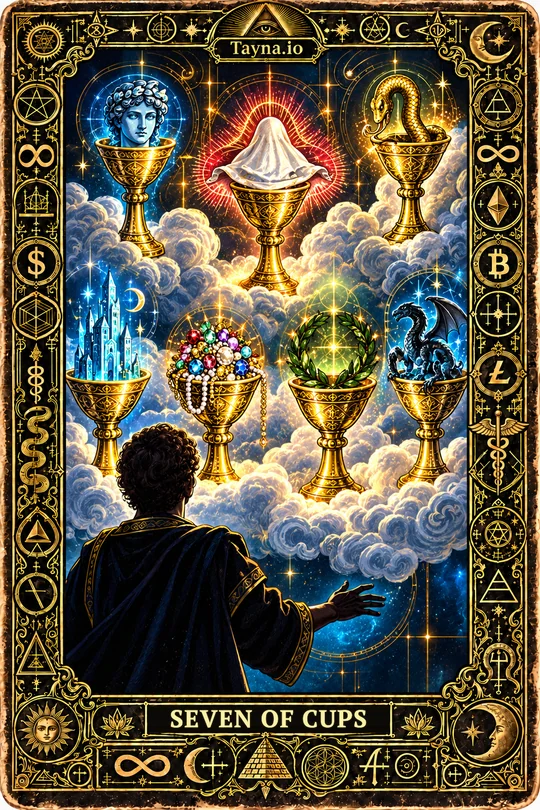
Seven of Cups
The Seven of Cups is a test of choice and fantasy — many options, not all of them real. Unlike the combative Wands, the danger here is quiet: getting lost in daydreams and choosing nothing. It advises separating what you wish for from what is possible, then picking up one cup.
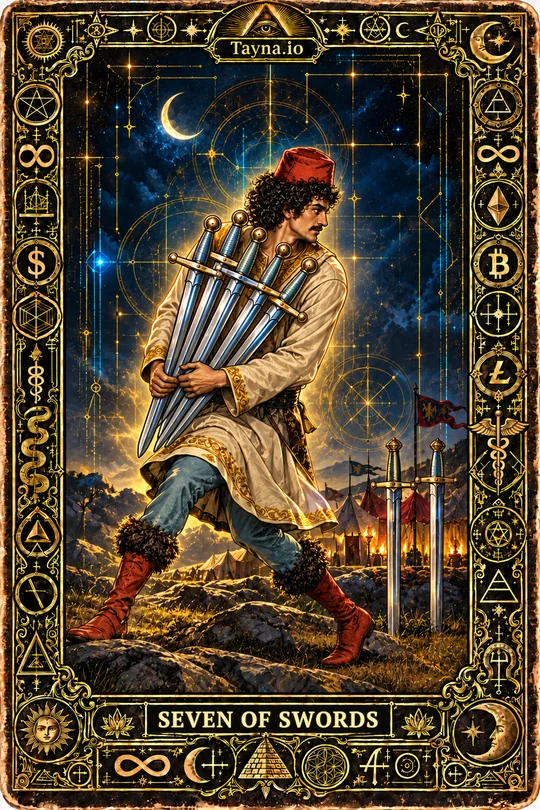
Seven of Swords
The Seven of Swords is a test of cunning: strategy, a workaround, something left unsaid, or someone else's deception. It is the most ambiguous seven, because the mind serves both defence and trickery here. It asks where you are being clever and where you are dodging an honest talk.
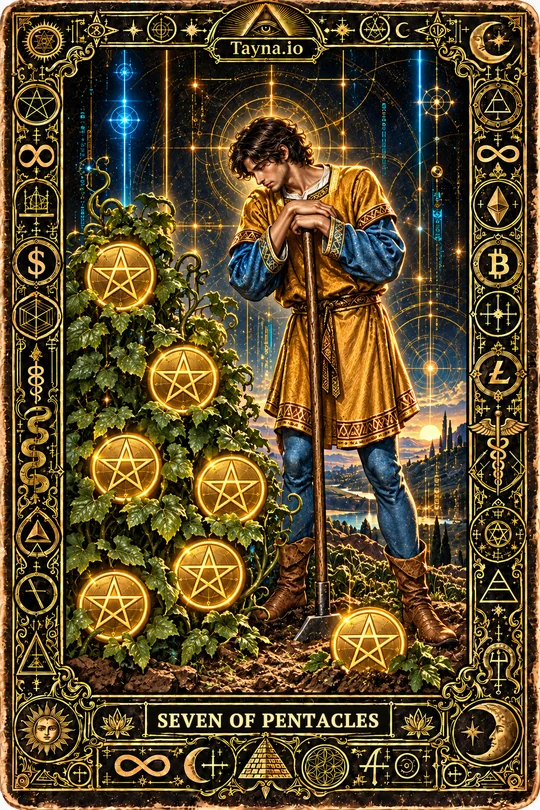
Seven of Pentacles
The Seven of Pentacles is a test of patience: the work is done, the harvest is still ripening. It is the slowest and calmest seven. The card invites you to assess your effort, see what is bearing fruit and what can be dropped, and stop rushing what needs time.


What the number seven means in tarot
In Minor Arcana numerology, seven is the number of testing. The six restored balance; now life asks whether that balance can handle real weight. Unlike the five, the seven does not break things — it probes them. It brings a choice, a doubt or an opponent so you can see what your position actually rests on and how solid it really is.
Seven has long been tied to mystery and seeking: seven days, seven notes, seven colours of the rainbow. In tarot, this shows up as cards that rarely give a straight answer. A seven describes a situation where you need to pause, look closer and pick an approach. Its value lies less in the outcome than in the clarity you gain while passing the test.
How the four sevens differ
Every seven tests you, each in its own way. Wands test resilience — your ability to defend what is yours under pressure. Cups test the clarity of your desires and your ability to choose among temptations. Swords test honesty: where the mind serves the truth and where it serves a trick. Pentacles test patience and a sober view of what you have invested. Four exams, one shared question: what are you really standing on?
The texture of the situation tells them apart. If people are pushing back, arguing or contesting your place, it is probably the Seven of Wands. If every option looks equally shiny, it is Cups. If the story involves things left unsaid, hidden plans or a sense of being sidestepped, it is Swords. If the effort is already in and you are waiting for returns, it is Pentacles.
Several sevens in one reading
Two sevens mean the test runs on two fronts. The Seven of Wands with the Seven of Swords is a struggle where the other side is not playing entirely fair, and it matters not to sink to their methods. The Seven of Cups with the Seven of Pentacles is doubt about a long project: the urge to drop it for something new and shiny just as the harvest is nearly ready.
Three sevens describe a period of re-evaluation. Much of what felt settled needs checking — plans, relationships, sources of income. It is tiring but useful: after such a stretch, only what can truly bear weight remains. A good strategy for these weeks is to promise less, observe more and write down your conclusions, so later decisions rest on facts rather than mood.
All four sevens in one reading signal a major exam running across every area at once. It is likely time to review your whole approach: where you defend out of habit, where you dream instead of acting, where you cut corners, where you wait too long. The right response is not panic but a calm, honest audit of how you have been playing the game.
Sevens in combination with other cards
The Major Arcana reveal the lesson behind a seven's test. The Seven of Cups with the Moon deepens the fog: right now it is hard to tell intuition from wishful thinking. The Seven of Wands with Strength says calm inner confidence, not aggression, will carry you. The Seven of Swords with Justice means hidden things come to light. The Seven of Pentacles with the Hermit asks for solitary reflection on what is worth continuing.
With other ranks, sevens hint at how the test ends. The Seven of Wands with the Six of Wands is a position held and recognition secured. The Seven of Cups with the Two of Swords is indecision that is starting to get in the way of daily life. The Seven of Swords with the Page of Swords points to a curious person gathering information. The Seven of Pentacles with the Eight of Pentacles is patience turning into skill and steady income.
Reversed sevens
A reversed seven shows the test not going to plan. The reversed Seven of Wands is fatigue from constant defence and a wish to give up — or the opposite, fighting where nobody is attacking. The reversed Seven of Cups can mean sobering up: illusions fade and the choice suddenly becomes obvious. It is one of the few sevens that brings relief when it appears upside down.
The reversed Seven of Swords often means something hidden is surfacing, a plan has fallen through, or conscience is urging a confession. The reversed Seven of Pentacles is impatience and frustration with a long effort, the urge to quit halfway. The advice for every reversed seven is similar: pause, recall your original goal and check whether the conditions have changed. Sometimes a new strategy beats stubborn persistence.
Frequently asked questions
Is the Seven of Swords the only seven about deceit?
Mostly, yes. The Seven of Cups can hint at self-deception, but deceit between people belongs to the Swords — and even there it often means clever strategy or discretion rather than lying. Neighbouring cards clarify which.
Which seven is the most positive card?
Usually the Seven of Pentacles, since it promises a harvest for patience. The Seven of Wands is favourable too, as long as you have the energy to hold your ground.
What do two sevens in a reading mean?
Two sevens show testing in two areas at once. Work out which one needs action and which needs a pause and careful observation.
Why are sevens called cards of choice?
Seven brings a test that can be passed in several ways — defending, dreaming, outsmarting or waiting. The strategy you pick shapes how the story ends.
Is the Seven of Cups a yes or a no?
More of a 'not yet clear': there are many options and reality has not settled. Ask again once you have narrowed your choices to one or two concrete paths.
Which card will you draw today?