Pages in tarot: the messengers and students of the deck
A Page in tarot is the youngest court card: a student, a messenger and the first spark of interest in the suit's theme. As a person, it usually points to someone young or new to the situation.
The four pages by suit
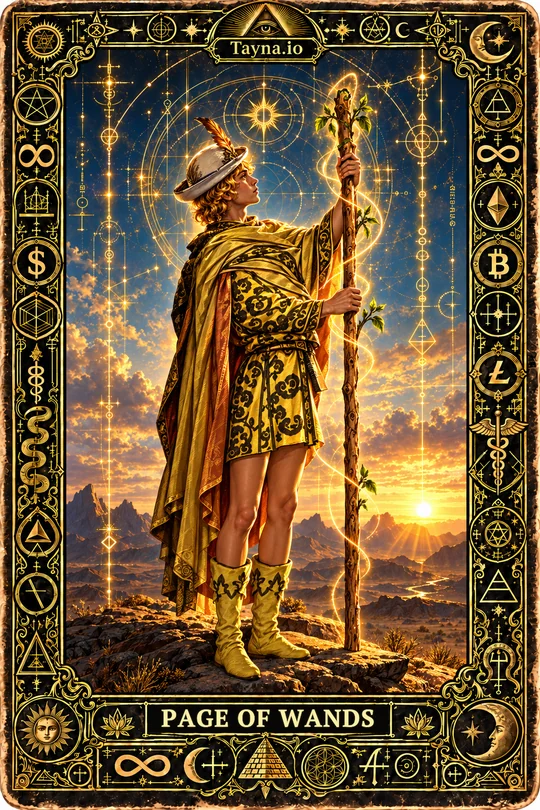
Page of Wands
The Page of Wands is a spark of enthusiasm: a fresh idea, the urge to try something out, news about a trip or a project. They are the most impatient Page. Where the Page of Pentacles studies first, the Page of Wands catches fire and runs.
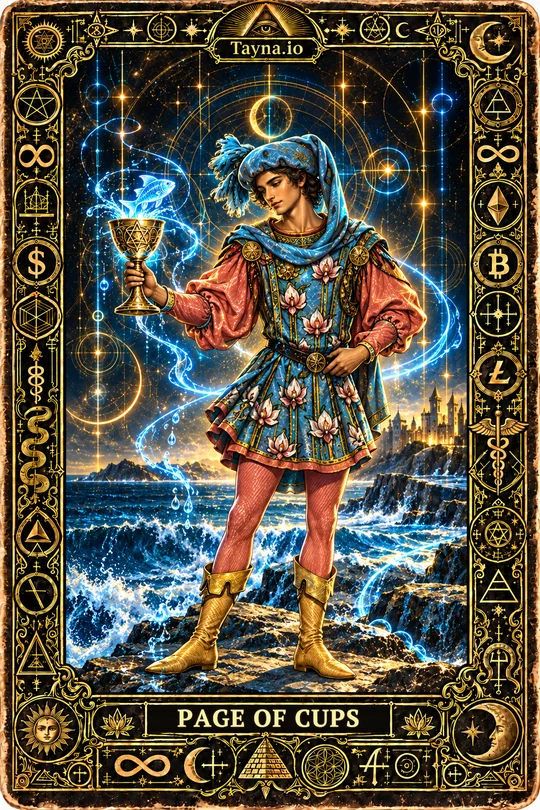
Page of Cups
The Page of Cups is a sensitive dreamer bringing emotional news: an admission of feelings, an invitation, a creative idea. Of all the Pages, they are the most open-hearted and the easiest to hurt. While the Page of Swords tests every word, the Page of Cups trusts intuition.

Page of Swords
The Page of Swords is a curious observer with a sharp mind who notices everything and questions everything. Their news needs checking: rumours, messages, snippets of overheard conversation. Unlike the gentle Page of Cups, they stay on guard and learn through doubt and debate.
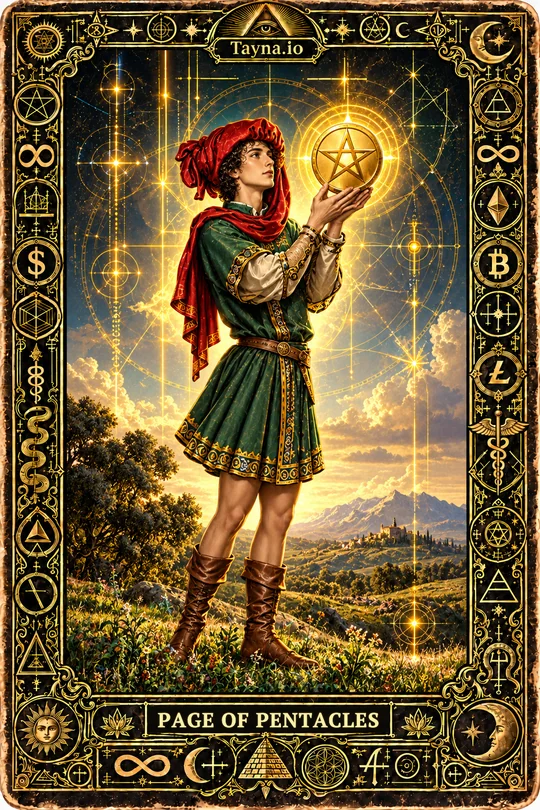
Page of Pentacles
The Page of Pentacles is the diligent student mastering a craft step by step. Their message is practical: a job offer, a course or good news about money. Slower than the Page of Wands, they finish what they start and value results they can hold in their hands.


Who the Pages are among the court cards
The court cards are four stages of maturity within a suit, and the Page stands on the first step. They have left the world of pure potential where the Aces live, but cannot yet act with the confidence of a Knight. Their element is interest: first contact with a subject and a willingness to ask questions.
The Page's second role is the messenger. In many readings they do not describe a person at all but announce that news, a message, a call or an offer connected to the suit is on its way. Such news is usually modest in scale, yet it opens a door. Whether you walk through it or leave the invitation unanswered is up to you.
How the four Pages differ
The easiest way to tell the Pages apart is by how they learn. The Page of Wands learns by doing: try first, figure it out later. The Page of Cups learns through feeling and imagination and needs the subject to move them. The Page of Swords learns by questioning and arguing. The Page of Pentacles learns by method, repeating a skill until it becomes reliable.
Their news differs too. A message from the Wands inspires and calls you onto the road; from the Cups it warms and concerns relationships; from the Swords it makes you think and sometimes stings with cold truth; from the Pentacles it brings specifics such as figures, documents and offers. If the nature of the news is unclear, the suit names the area and the neighbouring cards set its tone.
Several Pages in one reading
Two Pages side by side usually mean things are livening up: news is arriving from two directions, or two young or inexperienced people are involved. The Page of Cups with the Page of Wands suggests light flirtation, a creative friendship or an inspiring project. The Page of Swords with the Page of Pentacles points to study, exams or paperwork where attention to detail matters.
Three Pages often describe a setting full of beginners and short on experience: a new team, a class, a group that is only just forming. Sometimes they hint that the question lacks a mature perspective and that a mentor would help. In personal matters, three Pages can mean gossip and a lot of talk going on around you.
All four Pages are very rare and send a strong message about learning. Life seems to sit you down at a desk in every subject at once: feelings, money, work and ideas all call for new skills. This is no cause for alarm. It is an invitation to lower the bar for yourself and accept being a student who does not have every answer yet.
Pages in combination with other cards
The Major Arcana show how much weight a Page's news carries. The Page of Cups next to The Lovers can mean a confession of feelings or a first date, and the Page of Pentacles with the Wheel of Fortune a lucky offer worth catching. The Page of Swords with Justice points to letters and documents that need attention, while the Page of Wands with The Chariot suggests a trip or a fast start to a new venture.
With numbered cards, the Page shows what exactly is beginning. The Page of Pentacles beside the Eight of Pentacles is an apprenticeship, an internship or hands-on training. The Page of Cups with the Three of Cups brings a party invitation or happy news from friends. The Page of Swords with the Seven of Swords advises double-checking information, since someone may not be telling the whole story. Next to a Queen or King of the same suit, the Page usually plays the apprentice.
The Page as a person, and reversed Pages
As a person, a Page is most often someone young of any gender: a child, a teenager, a student, or an adult who has just entered a new field. Age is flexible here; what matters is the beginner's stance and openness. The Page of Wands is lively and impulsive, the Page of Cups tender and dreamy, the Page of Swords observant and blunt, and the Page of Pentacles calm, patient and dependable.
To tell whether the Page is a person or a situation, look at the position and the question. If you are asking about the people around you, or the Page lands in a position about others, it most likely stands for a specific person. In positions about events or the near future, it usually means news or a beginning. Neighbours help too: among court cards it becomes a character, among numbered cards an event.
A reversed Page shows the suit's theme in an immature form. The reversed Page of Wands is enthusiasm that burns out before anything starts; the Page of Cups is touchiness and retreat into fantasy; the Page of Swords is sharp words, gossip and hasty conclusions; the Page of Pentacles is neglected study or a missed chance. As a messenger, a reversed Page more often means delayed news than no news at all.
Frequently asked questions
Is a Page in tarot always a child?
No. A Page can be anyone of any age or gender who is new to the suit's area of life. It is often a young person, but an adult who has just started learning fits too.
What kind of news does a Page bring?
It depends on the suit: Wands bring news of travel or projects, Cups of feelings and invitations, Swords of messages and conversations, Pentacles of money, work and study.
What do two Pages in a reading mean?
Two Pages point to several pieces of news at once or to two young people involved in the situation. The suits narrow down the area: creativity, love, study or money.
Which Page is the most positive card?
Many readers name the Page of Cups and the Page of Pentacles: the first brings warm news, the second practical opportunities. The other Pages are positive too when you are open to learning.
How can I tell if a Page is a person or an event?
Check the position and the question. In a position about others, or when you ask about people, the Page usually means a person; in positions about the future it more often shows news or a start.
Which card will you draw today?