Tens in tarot: how each suit reaches its end
A Ten in tarot is the end of the suit's cycle: what began with the Ace reaches its limit here. It is a result, sometimes joyful and sometimes too much, after which a new round begins.
The four tens by suit
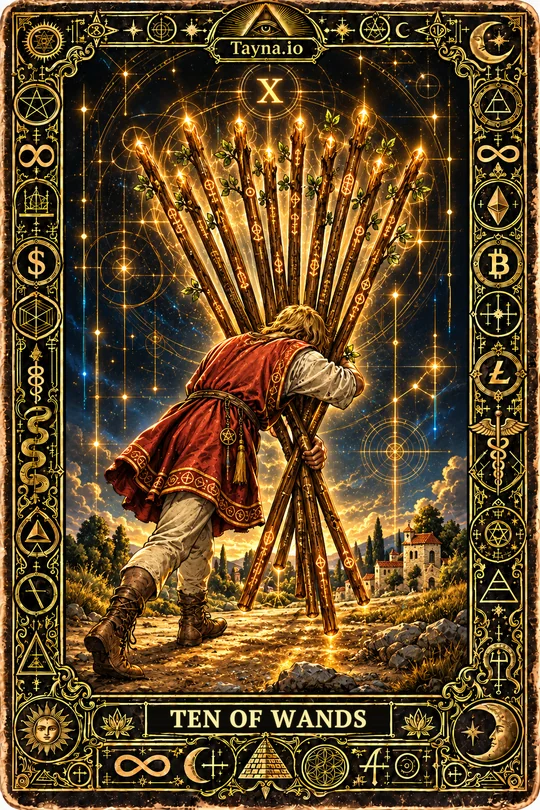
Ten of Wands
The Ten of Wands is success that has turned into a load: so many commitments taken on that the road ahead disappears behind the bundle. Unlike the Ten of Cups, where the ending brings rest, this ending first asks you to put some of the weight down and share the work.
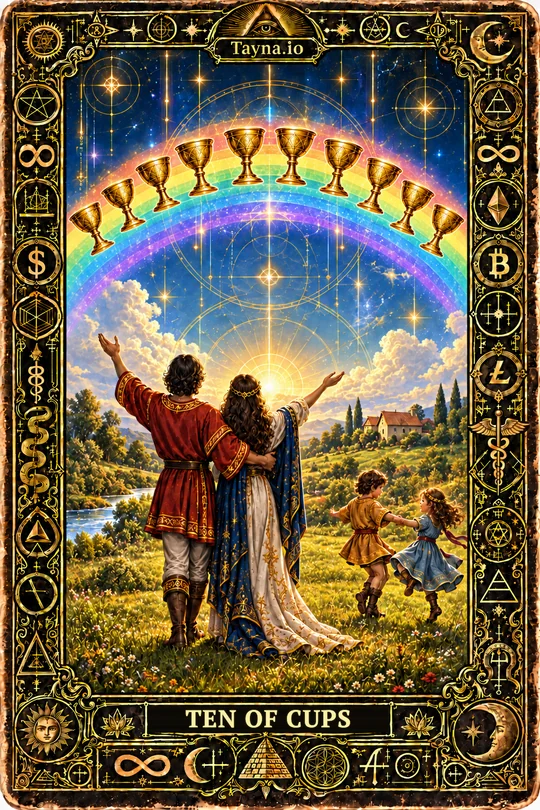
Ten of Cups
The Ten of Cups is emotional fullness, a warm home and the sense of belonging among your people. It is the brightest of the Tens: where the Pentacles build a legacy out of property and money, the Cups build one out of affection and shared memories.
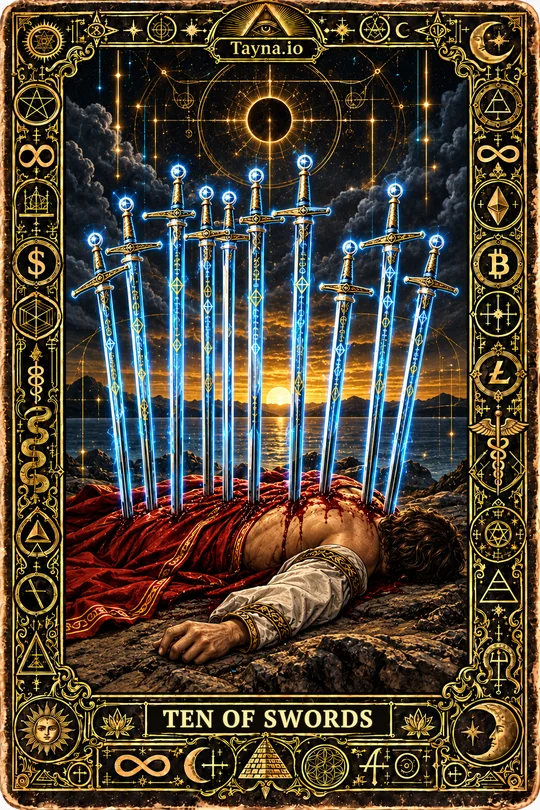
Ten of Swords
The Ten of Swords is a painful but final ending to a story that ran out of life long ago. It is the most dramatic Ten, yet behind the gloom sits relief: it cannot get worse from here, and the dawn on the horizon shows the only way left is up.
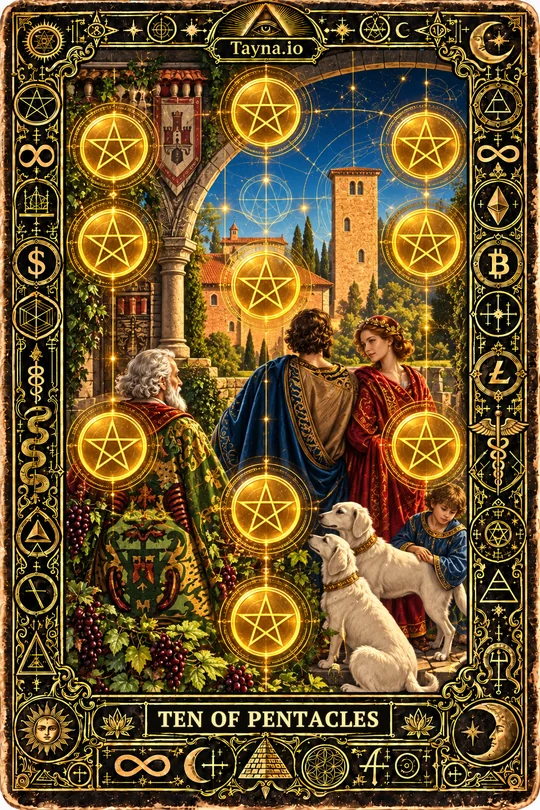
Ten of Pentacles
The Ten of Pentacles is long-term security, family tradition and what you leave behind. While the Cups focus on closeness here and now, the Pentacles look generations ahead: inheritance, a family business, a house where everyone gathers. It is the suit's result measured in decades.


What the number ten means in the Minor Arcana
Ten is a one followed by a zero, and in Minor Arcana numerology that image works literally: the suit has travelled its full cycle and returns to the start on a higher level. The Nine stood at the threshold; the Ten walks through it. There is no 'almost' any more. The result has arrived, and its consequences have to be accepted, welcome or not.
Tens have a habit of tipping into excess. The energy the suit gathered over nine steps can overflow, which is why one Ten shows happiness big enough for a whole family and another shows a burden too heavy to carry. The number itself passes no judgement. It simply records that the suit has delivered everything it had to give.
How the four Tens differ
Think of the Tens as four answers to the question 'how did it end?'. The Wands answer: with more work and responsibility than anyone could reasonably carry. The Cups: with love and a sense of home. The Swords: with a full stop that leaves nothing left to argue about. The Pentacles: with a solid foundation that will outlast current troubles and serve the people who come after.
Another clue is how many people share the scene. The Ten of Wands carries everything alone, and the Ten of Swords is solitary in its ending too. The Cups and Pentacles, by contrast, are crowded with partners, children, friends and several generations at one table. The suit shows whether the outcome is shared or falls on one pair of shoulders.
For a work question, the Ten of Wands usually means overload, while the Ten of Pentacles means a secure position with a long horizon. In love, the Ten of Cups brings harmony, and the Ten of Swords an honest end to a relationship that no longer supports either person. The position adds nuance, but each suit's character stays recognisable.
Several Tens in one reading
Two Tens mean two stories are wrapping up at once. Cups and Pentacles together are one of the kindest pairs in the deck: home, closeness and material support arrive together. Wands with Swords suggest that overload has finally forced an ending, and the most useful step is to admit the old way of living has stopped working.
Three Tens point to a major turning point, where a whole chapter closes rather than one episode. It is often a time when work, home or social circle changes. Don't read this as a threat. It says the previous stage has run its course and invites you to sort through what to carry forward and what to leave where it belongs.
Four Tens in one reading are rare and signal a broad renewal across every area of life. Feelings, money, projects and beliefs all reach their conclusion together. Resist rushing into new decisions. Give yourself time to digest what has ended, and the next cycle will start by choice rather than by momentum.
Tens in combination with other cards
With the Major Arcana, a Ten becomes part of a larger story. The Ten of Swords beside The Tower intensifies the theme of old structures collapsing quickly, while beside The Sun it softens: clarity comes soon after the ending. The Ten of Cups with The Lovers describes a partnership growing into a family. The Ten of Pentacles with The World is a completed achievement you can enjoy for years.
With other ranks, look at what comes before and after. An Ace straight after a Ten of the same suit means the next round starts without a break. The Ten of Wands next to the Four of Swords advises resting before overload becomes a way of life. The Ten of Pentacles with the Eight of Pentacles is success built by long, patient craft and attention to detail.
Court cards hint at who takes part in the outcome. The King of Pentacles beside the Ten of Pentacles can be a family elder or mentor whose experience helps protect what has been built. The Page of Cups beside the Ten of Cups often brings happy family news. The Knight of Wands beside the Ten of Wands is someone adding tasks to a pile that is already too tall.
Reversed Tens
A reversed Ten often means the outcome is dragging on or feels different from what you expected. The reversed Ten of Cups is a picture-perfect surface hiding things left unsaid, or family expectations that do not match your own. The reversed Ten of Pentacles touches on disputes over property, shaky shared finances or reluctance to live by someone else's traditions.
The reversed Ten of Wands can mean part of the load has finally been dropped, or that you keep hauling it out of duty without noticing how tired you are. The reversed Ten of Swords is usually gentler than the upright card: the worst moment is behind you and recovery has begun, even if the old story still echoes. Read it as climbing out, not falling further.
Frequently asked questions
Which Ten is the happiest card?
Usually the Ten of Cups, which describes emotional fulfilment, home and harmony with loved ones. The Ten of Pentacles is also favourable, though its happiness is more about security and the long view.
What do three Tens in a reading mean?
Three Tens together describe a whole life chapter closing. Several stories end at once, which makes it a good moment to decide what you want to take into the next stage.
Does the Ten of Swords mean everything is over?
No. It marks the end of one specific situation that had long run its course. The dawn in the picture matters: from this point, recovery begins.
Why is the Ten of Wands considered a heavy card?
It shows overload, with more obligations than energy. The card suggests handing some tasks to others and deciding which parts of the burden are truly yours.
Is a Ten good or bad in tarot?
Neither on its own. The number simply marks the end of a cycle, while the suit and neighbouring cards show what kind of result it is.
Which card will you draw today?